


Using The Wet Fly Swing For Trout by Jason Akl
article copyright
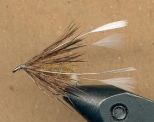 I am sure almost all fly fishermen at one time or another have looked into their own or another angler’s respective fly boxes and seen soft hackle fly patterns and wondered if these simple flies could really be as productive as everyone always talks about. Wet flies are conventional fly patterns which imitate drowned dry flies stuck in the waters strong current.
At first glace, wet fly patterns really do not look a whole lot different than dry fly patterns. With closer observation you can notice that wet flies are tied fairly sparse, and incorporate a soft hackle or fur collar tied in swept position. These light dressing and special hackle allow the wet flies to easily cut through the waters surface and drift along within the current’s tow. The real key to the wet flies great reputation is the fly’s ability to catch fish. This ability to consistently dupe fish is not entirely due to the fly pattern but rather the way in which these flies are fished. The wet fly swing is literally everything it sounds like: presenting a wet fly in a swinging fashion to feeding fish. This technique of presenting flies is easy for beginners to learn and allows an angler to expand their repertoire of flies fished. Wet fly patterns on the market today are a world different then the flies fished a few generation ago. Wet fly patterns as a group now consist of minnows, leeches and dragonflies along with the traditional imitations of sunken dry flies allowing anglers to enjoy wet fly fishing with a large variety of patterns. However, as easy as this technique is to learn, truly understanding the wet fly swing comes from knowledge of where the fish lie, their feeding habits and the ability of the fly angler to control the fly as it is swinging.
To be productive at the wet fly swing technique anglers need to know what type of tackle requirements are needed to best get the job done. Ideally a 9 ft 4 / 5 weight rod rigged with a floating fly line should be used with this technique on most waters, whereas shorter rods can be substituted for fishing small overgrown streams. Tippet size and leader lengths should be tailored to the size of the river and type of fish you are planning on catching. Use as small of a leader and tippet as possible without compromising you chances of losing fish to break offs. It is of no use to you to be able to consistently fool fish, but not be able to bring them in when the leader/tippet you are using is too light to fight the fish. For starters leaders 9 ft in lengths will handle most waters while scaling down to a 7 1/2 ft leader will cover the smaller streams. Tippets of 2X, 3X and 4X are suggested for starters to help resist the shock of a fish hitting on a taught line.
The best bet to learning this technique is to get out for a day and practice on the water. Start off with a general up-and-across type of fly cast to present flies upstream of their target. 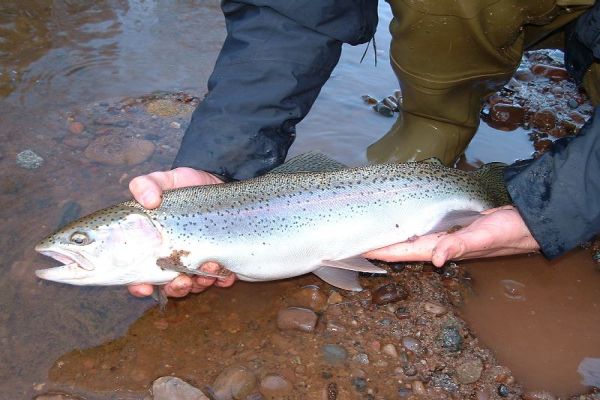 A key to this upstream presentation is placing the fly in the fish’s field of view without ever letting the fish catch a glimpse of the line or the angler. A typical cast should be in the range of 15 to 25 feet for beginner and intermediate anglers while longer casts can be made but are warned against seeing as detecting strikes and hooking fish gets increasingly tough with the longer line length. Once the line reaches the waters surface, begin mending the line so that the fly will achieve a natural looking drift under the waters surface. A quick strip of the line as the fly initially lands on the water surface will cut the surface tension allowing the fly to sink below the surface. Getting the fly beneath the waters surface quickly and achieving a drag free drift is very important to performing the wet swing technique. This starting sequence allows the fly to get down to eye level with the fish while at the same time simulating an aquatic insect that has become drowned or dislodged and swept downstream. Trout will greedily rise to this dead drifting wet fly presentation the same as they do to dry flies, gluttonously feeding on whatever floats downstream.
When the fly line reaches a position perpendicular to the fly angler a mend is needed to be made across the current. This line mend (depending on the current, could be upstream or downstream) will allow for the body of the fly line to be pushed downstream faster than the fly ultimately imitating an escaping insect or injured minnow. The swinging motion of the fly will continue until the fly reaches a point directly beneath the fly angler. When the fly reaches a point below the angler, it is a good idea to hold still for a second or two and then smoothly raise the rod tip and the line in one motion. Raising the line will bring the fly up from the depths simulating an emerger or swimming insect rising off of the bottom. A few timely strips of line after the fly is near the surface will make sure no fish are following the fly and for the most part end the cast. Take two to three steps and forward and repeat this swinging process until all the possible fish holding locations have been explored.
After you have learned to present flies using the wet fly swing the ideal water type for presenting flies should range somewhere between 3 to 10 feet deep and have a relatively moderately fast flow associated with it. A good idea is to find a river that holds an abundance of submerged or partially submerged structure to provide key ambush spots for large trout. Although structure is key for finding large trophy fish, the majority of fish can be found in the transition zone in the current. This transition zone is the section of the river where the current slows down (fast run to slow riffle) or speeds up (slow break to fast run). Keying on these transition zones and presenting flies just above these critical currents changes will allow flies to be pulled downstream in a natural fashion to the watchful eye of hungry fish.
Swinging wet flies in the current has been an effective fishing catching technique for the better part of the last century for anglers all around the world. Taking the time to learn this technique and add it to your repertoire of skills will only increase your odds of consistently catching more and larger fish. A key to the popularity of the wet fly swing technique is that the flies used do not need to be precise imitations of aquatic insects, but rather just general fishy looking flies with soft hackles. These simplistic patterns save anglers valuable time at the vice which they can spend out on their favorite bodies of water catching the fish of their dreams.
author website: visit | author bio











 Worlds Largest Grizzly Bear
 Free Printable Targets
 Wild Animal Sound Bytes